


Leave your contact details and we will contact you
Rails and Sleepers. The history of massage and portable electric massagers
Massage is one of the most ancient medical practices, whose roots go so deep into the past that they cannot be traced even approximately. Practically every person knows its simplest techniques, and over many centuries a multitude of scientific theories and schools have grown up around it.
Considering that massage involves the repeated repetition of the same movements and requires considerable physical effort, it is not surprising that over time people began to think about mechanizing this procedure. This led to the emergence of an extensive segment of medical equipment in a wide variety of formats and purposes, including the fact that mechanotherapy became the prototype of a number of devices in the category of "adult products."
We tell you why the first mechanical massagers required coal and why one of the world's leaders in mechanical engineering was ashamed of the most successful product in the segment. And also how a new class of portable massagers was created from an ordinary screwdriver.
From ancient practices to medical science
Massage is one of the most natural medical practices. One could say that at a basic level practically every person uses it. We mechanically rub a bruised spot or knead a stiff neck. And small children in Russia and the countries of the former USSR do not fall asleep without the massage rhyme "Rails-rails, sleepers-sleepers…" This requires no special knowledge; we simply know that a certain touch is capable of relieving unpleasant sensations in one or another part of our body or of helping a child fall asleep.
Evidence of the use of various massage techniques is found in a wide variety of cultures literally all over the world. And the roots of many modern massage "schools," especially Eastern ones, can be reliably traced back several centuries.
One of the most important centers of the development of these practices has always remained the countries of Asia; in India and China the body was regarded as a single system, and certain areas and points on its surface were linked to the functioning of internal organs and the general state of the organism. Therefore massage naturally coexisted with other methods of influencing the body, including acupuncture in China and various practices of Ayurvedic medicine in India.
Massage was also well known to ancient physicians. Interestingly, here it was often a practice of "sports medicine." Athletes were rubbed and kneaded before competitions to prepare the body for physical exertion, and after training and competitions massage was used to accelerate the recovery process. Later these practices became widespread in Ancient Rome as well, where massage became an integral part of the culture of the baths.
One could say that professional masseurs — aleipts — also appeared in ancient Greece. Their duties included rubbing the bodies of athletes, so they can also be called specialists in sports medicine.
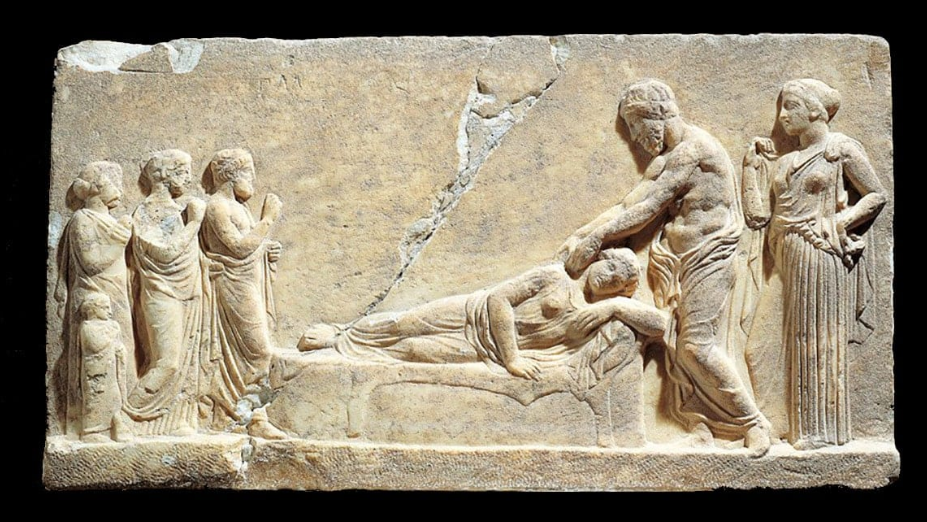
A bas-relief depicting Asclepius performing a procedure resembling massage. 4th century. Source: Archaeological Museum of Piraeus
In the Middle Ages massage in Western medicine began to lose its former position. There were a whole number of reasons for this: a change in medical culture, the weakening of the ancient written tradition and religious ideas. However, massage never disappeared entirely, especially among ordinary people. It is unlikely that anyone would have stopped a peasant from kneading his neck after a hard day of work in the field, and various rubdowns were literally standard practice in folk medicine.
Here one can also recall the bathing traditions of the Slavs and Finno-Ugric peoples, in which massage, including with the help of a besom made of birch or oak branches, is an important part of everyday culture.
The revival of massage in European medicine began only by the 16th century. One could say that this practice returned at the moment when medical science itself began to revive. Some massage techniques were described in his works by one of the fathers of modern surgery, Ambroise Paré. However, massage became a truly systematized medical practice already in the 19th century. An important role in this was played by the Swedish physician and educator Per Henrik Ling, who developed a system of therapeutic gymnastics. His system included not only physical exercises but also various manual techniques. And his son Hjalmar Ling, together with his father's students, created a complex of gymnastics apparatus, including the wall bars, which in our country are widely known under the name "Swedish wall."
Massage finally entered Western medical practice by the end of the 19th century. It was used in orthopedics, traumatology, rehabilitation and many other disciplines. Professional masseurs appeared as well.
Mechanizers. How the first massagers appeared
The very idea of using special devices for massage has very deep roots. They have been known since antiquity, and hand-held massagers quite similar to modern ones existed in China several centuries ago.
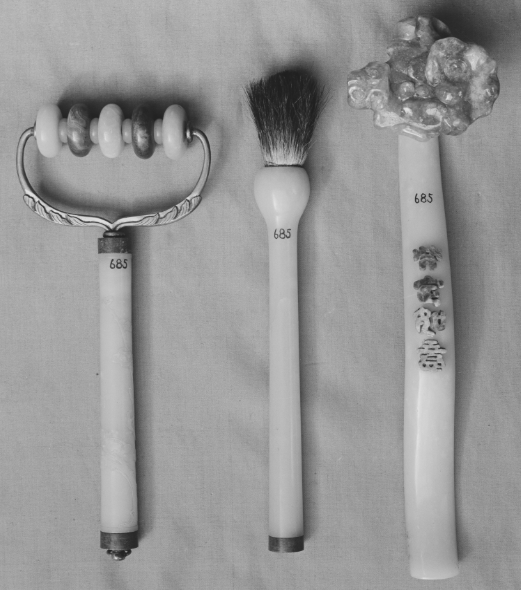
A Chinese massage tool made of nephrite, jadeite and carnelian, 18th century. Source: Metropolitan Museum
In the second half of the 19th century mechanization became one of the main technological "trends" of the era. It seemed that any human activity could be improved with the help of machines, and sometimes this gave rise to very bizarre devices. Massage techniques naturally did not stay on the sidelines, and thanks to Ling's works this direction was pursued very actively precisely in Sweden. In 1865 the physician Gustav Zander founded a "Medico-Mechanical Institute," for which he personally designed almost three dozen different machines for passive exercises of the limbs and torso. These were not so much massage apparatuses as a set of exercise machines for therapeutic gymnastics, some of which nevertheless possessed vibration massage functions for individual parts of the body.
Zander's devices were very popular in Europe and quickly spread throughout the world, including the fact that mechanotherapy institutes began to open in Russia. The first clinic with Zander equipment was opened in St. Petersburg in 1889, later they opened in Moscow, Odessa, Riga and Yessentuki. Interestingly, the "Zander Mechanotherapy Institute" in Yessentuki is still operating today, and besides it has managed to appear in film. It is here that certain scenes of Vasily Kuzyakin's conversations with Raisa Zakharovna from Vladimir Menshov's famous film "Love and Pigeons" take place.
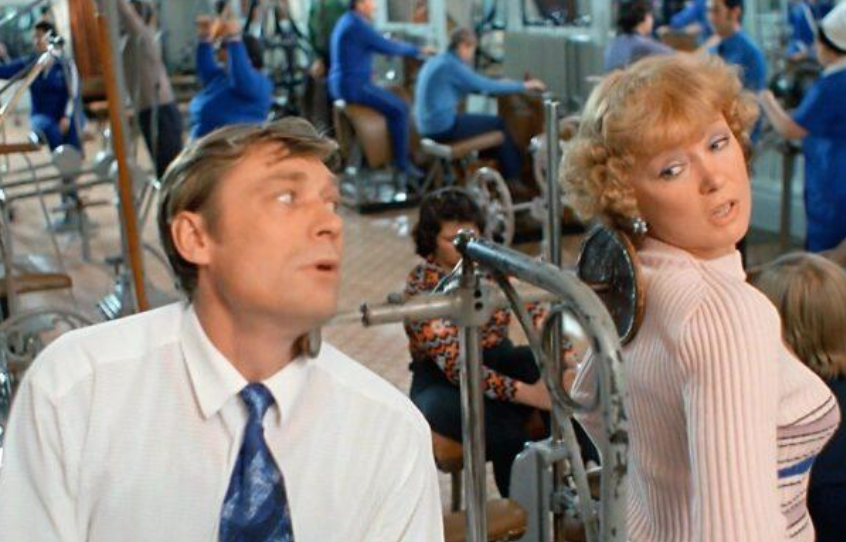
A frame with a massage apparatus from the film "Love and Pigeons," director Vladimir Menshov, 1984.
In 1869 the American physician George Taylor presented a machine intended specifically for massage, though a rather specific one; later it would become known as the Manipulator. At that time there was no question of compactness or portability; it was a very bulky stationary apparatus that performed massage movements with the user fixed in place. The mechanism was driven either manually or by means of a steam engine and was intended primarily for the treatment of "hysteria" (from the Greek hystera — womb). At that time this diagnosis was given to a considerable number of women, and among the symptoms were highlighted: anxiety, insomnia and irritability. One of the methods of therapy was a specific therapeutic massage, which presupposed bringing the patient to an "hysterical paroxysm" (orgasm). Manual manipulations sometimes continued for several hours and were hard physical labor for the physician; it was precisely to ease this work that the mechanized device was designed.
Far more opportunities were provided to designers by the development of electrical engineering. In the second half of the 19th century more or less compact electric motors appeared, which made it possible to create small devices for local action. Thus, already in the early 1880s the English physician Joseph Mortimer Granville presented an electric device for vibration massage in neuralgia.
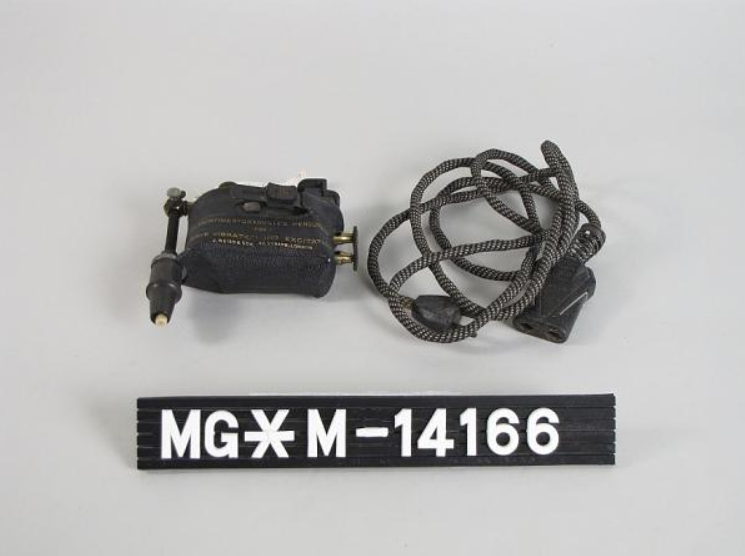
Granville's device. Source: Smithsonian Museum
By the beginning of the 20th century electric home massagers had become a fairly mass and popular product. Manufacturers advertised their devices as miraculous remedies for treating a multitude of ailments: from relieving fatigue to improving blood circulation and treating cardiovascular diseases. Technical progress did not stand still either. The possibility of operating in different modes and various interchangeable attachments appeared, and the devices themselves became more convenient and compact. However, a truly revolutionary device appeared only in the second half of the 20th century.
A successful product the creators did not love
After World War II Japan was experiencing a severe crisis, and industrial production fell sharply along with the standard of living. However, recovery proceeded at a rapid pace. Already in the 1950s Japanese industry returned to growth, and the 1960s became a time of economic boom and rapid development of the production of household appliances and electronics.
It was here that new devices appeared that quickly turned into mass goods and found buyers all over the world. Considering that massage had long been part of traditional Asian medicine, it is not surprising that the rapidly growing Japanese industrial giants also turned their attention to this topic.
It was in Japan that the first mass-market massage chairs appeared. In 1954 Fujiiryoki released the world's first serial model of such a device. It was semi-artisanal production: the prototype was assembled from a wooden frame, a bicycle chain and softball balls instead of massage rollers. The drive was also mechanical; it was still very far from the modern devices that can today be found in many Russian shopping centers.
Interestingly, one of the leaders of the Russian market of massage devices positions its products as a stylized Japanese brand.
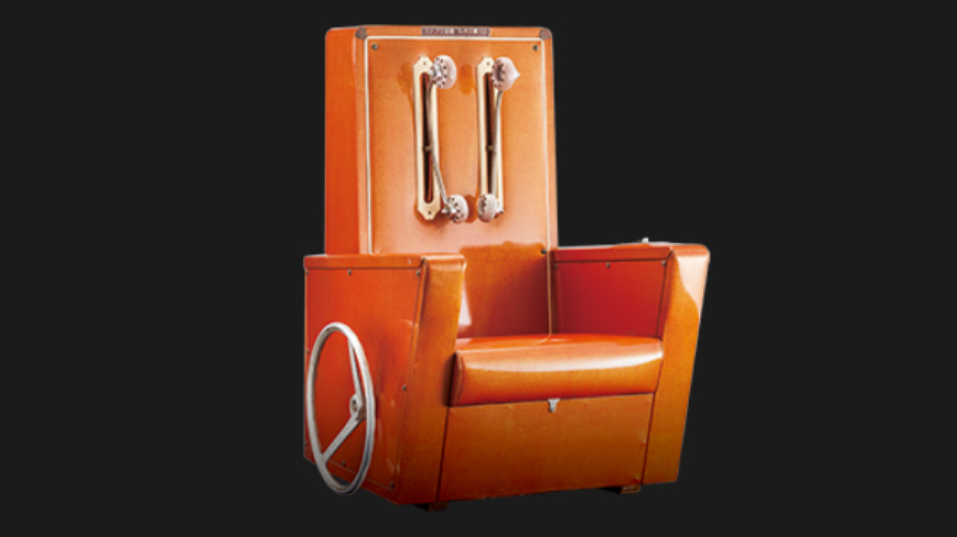
The Fujiiryoki chair. Source: Fujiiryoki
Portable massagers of Japanese manufacture also appeared fairly quickly. At first they were nothing special, however they were quickly improved, and thanks to their low price they began to enjoy demand, including in foreign markets. And soon a device appeared in Japan that not only changed the entire segment but also involuntarily became the progenitor of a completely new direction of household appliances.
In 1968 the company Hitachi presented the Magic Wand device. It was positioned as a universal electric massager for home use and was distinguished by a simple but elegant and recognizable design, as well as by reliability. The device enjoyed demand among consumers, however its true success was ensured by a different target audience and a somewhat different method of use. Moreover, the company itself was for a long time not very happy about this.
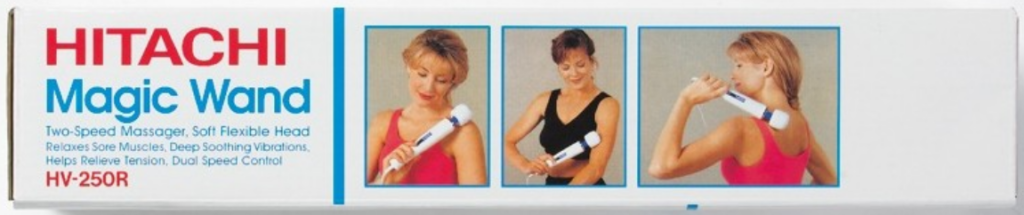
Packaging of the Hitachi Magic Wand vibration massager. Source: Wikimedia
In the seventies the device began to be actively used within certain educational programs devoted to female corporeality and sexuality. Information about the unusual use of the massager quickly spread far beyond the original audience, and sales began to grow rapidly. Thus the Magic Wand became not only a hit of the home medical equipment market but also one of the most famous devices in the adult products industry.
Interestingly, the company was not very happy about such success. Some representatives of management even proposed discontinuing the device, since they considered that this kind of unexpected fame was humiliating for a serious mechanical engineering company. However, high sales became a serious counterargument against this. Amusingly, for a very long time the company did not officially acknowledge the sexual use of the device publicly and continued to position it exclusively as a massager. The change occurred only in 2013: Hitachi removed its name from the name of the device, which continued to be sold under the Magic Wand brand.
Today devices in the Magic Wand form factor are widely represented both in the massage equipment market and in the adult products industry. The functionality of modern devices is noticeably higher, however the basic design of the late sixties turned out to be so successful that it is still used today.
Modern massagers: "guns" with AI
The further development of portable massagers proceeded primarily toward miniaturization and specialization. Compact devices appeared for massaging individual parts of the body: from the head to the feet. Naturally, the internal components were improved, new functions and adjustments appeared. From a relatively simple vibration device, massagers were becoming high-tech gadgets.
One of the most noticeable changes of recent years has been the spread of percussion massagers in the "gun" form factor. The very principle of impact action on muscles appeared significantly earlier, back in the seventies. However, this class of devices gained true popularity only in the 2010s. One of the main popularizers of this direction was the American chiropractor Jason Wersland, who presented a device under the Theragun G1 brand in 2016.
The device appeared thanks to a tragic accident; Wersland was in a serious crash and recovered for a long time from the injuries he sustained. Only deep point massage of the muscles helped cope with the chronic pain syndrome, however constantly visiting a professional masseur was expensive, and professional equipment for vibration massage was bulky and loud, and consequently poorly suited for everyday use. In the end he began developing a device of his own design, for which at the initial stage a cordless impact drill was used; in fact he assembled the prototype of the device from an ordinary screwdriver. Then this design was refined over approximately 10 years, but in the end the compact device quickly attracted the attention of the sports industry, and soon dozens of manufacturers began producing similar devices.
Now portable massagers, besides percussion devices, are available in dozens of variants: massage pillows, vibration platforms, massagers for the neck, head and even for the eyes. On the whole, about 5 million such devices worth 13–14 billion rubles are sold annually in our country (in retail prices, including VAT). According to the Retail Sales Audit of Medical Equipment in Russia (total sell out) of the analytical company RNC Pharma for the period from January to October 2026, 3.7 million portable massagers worth 10 billion rubles were sold in our country. The absolute leaders among branded devices are the companies Yamaguchi with a ruble share of 27.3%, Bork Electronics (11.4%), and also Halspell Electronics (3.4%), the latter selling devices under the Planta brand. The category also presents traditional manufacturers of medical equipment, for example the companies C.S. Medica and B.Well; they cannot boast of leading positions, but nevertheless are among the TOP-10.
Naturally, this segment has also not done without the now ubiquitous artificial intelligence, and in a wide variety of forms. Most often AI is used not in the devices themselves but to personalize procedures through mobile apps. However, gadgets with built-in AI have already appeared on the market too, though so far the marketing effect of this often outweighs the practical benefit. Robotic massage systems with quite real AI solutions are also present on the market, but they belong to the highest price segment and certainly cannot be classified as portable.