


Leave your contact details and we will contact you
Master of Iodine. From treating scrapes to radionuclide therapy
Iodine is well known to practically every person. Even before becoming acquainted with Mendeleev's table, almost every child has most likely already encountered this brown, characteristically smelling solution many times, since it is often the first thing used to treat any scratch. Housewives know perfectly well about iodized salt, and also about the fact that it is highly undesirable to use it for making marinades and pickles. But most importantly, iodine is simply essential for us to live normally, and its deficiency is a task that is tackled literally at the state level.
We tell the story of iodine in medicine, which began with seaweed and sponges and ended with radionuclide therapy. And also about what role the Napoleonic Wars and radiation accidents in various countries of the world played in this.
A by-product of artillery
Iodine is a very remarkable chemical element belonging to the group of halogens. It is extremely rare in nature in free form, but at the same time its compounds are very widespread in the environment. They are present in seawater, soils, rocks and living organisms. For us iodine is an indispensable trace element, necessary primarily for the synthesis of thyroid hormones. However, owing to a whole series of peculiarities, humans very often encounter its shortage.
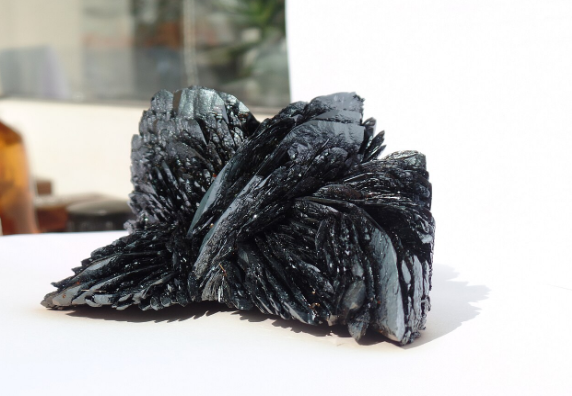
An iodine crystal. Source: Wikimedia
Iodine deficiency was known long before humanity became aware of the existence of this element. Even ancient works describe such a phenomenon as goiter — an enlargement of the thyroid gland, which was often accompanied by a noticeable swelling on the neck. Interestingly, the physicians of antiquity and ancient China even managed to find fairly effective remedies for this disease, most likely empirically. For this they used the ash of seaweed and sea sponges, which contained natural iodine.
As for the discovery of the element itself, it was indirectly brought about by Napoleon Bonaparte. In 1811 the Napoleonic Wars were in full swing, a year still remained before the defeat of his army, and the entire French economy was working for the ambitions of its emperor. Among others, the French chemist Bernard Courtois, who was engaged in the production of saltpeter necessary for the production of black powder, which at that time was the basis of artillery, was also working for the army. Under the conditions of the continental blockade, France lost its usual sources of imported raw materials and was forced to develop saltpeter production within the country.
Courtois tried to solve the problem of import dependence by using the ash of seaweed to obtain saltpeter. Once, in one of the experiments, when treating the ash, vapors of an unusual violet color were released, upon cooling of which a precipitate fell in the form of shiny dark crystals. Although the substance interested the scientist, he did not have the opportunity to engage closely in research. Therefore the further study was conducted by other chemists — the Frenchman Joseph Louis Gay-Lussac and the Briton Humphry Davy. It was they who independently of each other confirmed that the substance discovered by Courtois was a new chemical element. The name "iodine" itself comes from the Greek iodes — "violet."
The ash of seaweed remained a source of iodine for a long time. Today iodine is mainly extracted from natural brines, including as a by-product at oil fields.

Brown algae. Source: Wikimedia
Further research showed that iodine plays a huge role in the human body, primarily in the thyroid gland. It is iodine that participates in the synthesis of two of the most important hormones — thyroxine (T4) and triiodothyronine (T3). They participate in the regulation of metabolism, influence the functioning of the cardiovascular and nervous systems, and are also necessary for normal growth and development. Insufficient intake of iodine can lead to hormonal disorders. One of the most well-known consequences is endemic goiter (enlargement of the thyroid gland), known even to ancient physicians.
In addition, iodine deficiency can irreversibly affect the development of a child's nervous system, since thyroid hormones are necessary for myelination and development of the fetal brain. With severe insufficiency of the trace element during pregnancy, the disorders can be so serious that they lead to varying degrees of mental retardation. For children and adolescents, iodine-deficiency conditions also affect physical and mental development.
A deficient element
Iodine, like many other natural substances, is distributed unevenly in the environment. Some regions are well provided with iodine naturally, while others experience a serious deficiency of it. Moreover, a significant difference can be observed even within a single region; for example, in the coastal part of the Arkhangelsk Oblast iodine deficiency is observed significantly less often than in the southern part.
On the whole, in our country iodine deficiency remains a very widespread problem. More than half of the population lives in regions with a natural deficiency of this trace element. This problem has long been known to specialists; the first studies of the spread of endemic goiter started back in the mid-19th century, but a systemic solution to the problem at the state level was undertaken only in the USSR. Work on the study and prevention of iodine-deficiency diseases started in 1929, and already by the 60s–70s of the last century the endemic in most problem areas of our country had been reduced to literally isolated cases — this became one of the undoubted achievements of the Soviet healthcare system.
One of the most effective ways of mass prevention of iodine deficiency was the iodization of table salt. This is a simple and accessible method that allows regularly replenishing the lack of the trace element without the need to change the usual diet or take separate preparations. Today iodized salt remains the main tool for preventing iodine deficiency in many countries, including Russia. However, its availability in itself does not guarantee sufficient iodine intake: it is important that such salt is regularly used both at home and in the industrial production of food products. In addition, it has a limited shelf life, and with improper storage an almost complete loss of iodine can occur literally within a few months.
Now this problem is solved relatively simply; potassium iodide preparations are freely sold in practically any pharmacy. This substance has been used in medicine since the beginning of the 19th century, though back then, besides treating endemic goiter, it was actively used to treat syphilis along with preparations of mercury, bismuth and arsenic.
According to the "Retail Sales Audit of Medicines in Russia (total sell out)" of the analytical company RNC Pharma, in the first 10 months of the current year Russian pharmacies sold 3.9 million packs of potassium iodide preparations worth 705 million rubles, though in the current year sales are stagnating, the ruble volume grew by only 1.4%, and the natural dynamics are negative (-1.6% in packs). The absolute leader here is Iodomarin from Menarini; the brand provides 90% of the monetary volume of the market, and besides it is one of the few products in the category with positive sales dynamics. The market also presents domestic preparations of Potassium iodide from Ozon Pharmaceuticals and Obnovlenie.
The iodine grid
Iodine began to be used in medicine soon after its discovery. One of the first known preparations was Lugol's solution, created in 1829 by the French physician Jean Lugol. Initially it was used to treat scrofula, but subsequently it became widespread in other areas of medicine as well, including in thyroid diseases. The solution consists of elemental iodine and potassium iodide dissolved in water. The latter helps to increase the solubility of iodine.

Advertisement for iodine solution, first half of the 19th century. Source: Library of Congress
However, a far more familiar medicinal form, known to almost everyone, became the alcohol tincture of iodine. In everyday speech the word "iodine" usually denotes precisely this preparation. It is used to treat the skin, both in hospital conditions (before medical procedures) and at home. One could say that the iodine solution has become a natural companion of an active childhood for several generations of people.
The antiseptic action of iodine is connected with its ability to oxidize and damage proteins and other structures of microorganisms. It is active against many bacteria, viruses and fungi. The alcohol base itself also possesses antiseptic properties. However, the same is connected with its drawbacks: the alcohol solution irritates the skin, can cause chemical burns and on the whole is poorly suited for treating extensive injuries.
Subsequently more modern preparations appeared as well, at the junction of physics and chemistry. The most famous example, of course, is povidone-iodine, which appeared in the mid-fifties of the 20th century (in our country it is widely known under the trade name Betadine). This remedy is a complex of iodine with the polymer polyvinylpyrrolidone, which acts as a "carrier." Thanks to this the preparation dissolves better in water, and iodine is gradually released from the complex, providing a prolonged antiseptic action. At the same time its irritating effect on tissues is reduced compared with ordinary solutions of elemental iodine; in pediatrics this is a valuable property — povidone-iodine does not sting.
Now the antiseptic properties of iodine are used in a whole series of directions; besides treating wound surfaces, it is used in the treatment of throat diseases (for example Yox from the company TEVA), and such preparations are fairly widespread in gynecology and proctology. The total sales volume of this conventional category of preparations in January–October 2026, according to the "Retail Sales Audit of Medicines in Russia (total sell out)" of the analytical company RNC Pharma, amounted to 23.2 million packs worth 3.1 billion rubles (in retail prices, including VAT). The leading role here is played by alcohol solutions of iodine, which account for almost 48% of the monetary volume. The retail sector presents products from 14 domestic companies, of which the maximum volume comes from the companies Zhenel and Flora Kavkaza. A noticeable position is also occupied by Betadine from Egis (part of the Servier group); this product formed 36% of the market in rubles, and besides solutions for external use it is also presented in the format of vaginal suppositories.
Iodine is extremely widespread in the home medicine cabinets of Russians; it is well known and, probably for that reason, it has acquired a whole set of various household methods of use. The most famous, perhaps, is the celebrated iodine grid. Initially it was used in hospital conditions, and over time it migrated into home practice. The iodine grid is often applied for bruises, colds, coughs and joint pain, in the expectation of a local irritating and distracting effect. However, there is no convincing evidence of the effectiveness of such a method for the listed conditions.
There is a widespread myth that the speed at which the iodine grid disappears allows one to determine iodine deficiency in the body. This, of course, is not so: the process rather depends on the evaporation and washing off of iodine from the skin surface.
There also exist far more dangerous "folk" methods. For example, ingesting the alcohol tincture or Lugol's solution to replenish iodine deficiency, which can lead to extremely undesirable consequences.
Most likely the reason for such a method of using iodine preparations was the accident at the Chernobyl Nuclear Power Plant in 1986 and the rumors around it, reinforced by a lack of information. At that time many people began buying up iodine preparations and using them for protection against radiation. Potassium iodide preparations were not available in sufficient volume in the retail network at that moment, so alcohol tinctures, which were in any pharmacy, were usually used; they were taken orally even in areas maximally far from the affected zone.
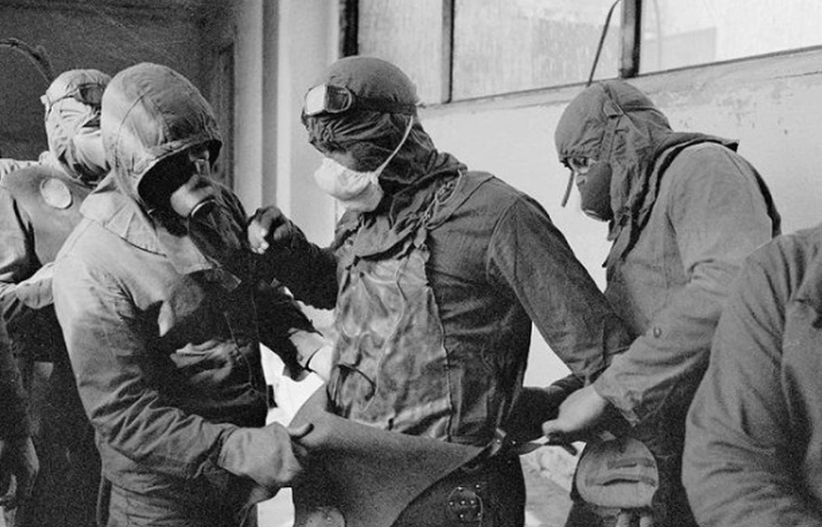
Liquidators of the accident at the Chernobyl Nuclear Power Plant. Source: Komsomolskaya Pravda archive
This practice had quite real medical grounds, although in the mass consciousness they received a completely incorrect interpretation. Radioactive iodine, which is released during certain types of radiation accidents, indeed represents a serious danger. That is precisely why back in the 60s of the last century scientists in the USSR and the USA began developing an antidote based on potassium iodide, whose timely intake reduces the absorption of radioactive iodine by the thyroid gland, as if replacing it with the radioactive isotope.
For the first time this preparation was used on a mass scale precisely in the USA; in 1979 an accident occurred at the Three Mile Island Nuclear Power Plant, which led to the melting of the reactor core, which among other things was accompanied by the release into the atmosphere of a number of radioactive elements, including iodine-131. During the accident at the Chernobyl NPP, potassium iodide was already part of the standard set of the emergency reserve of civil defense forces, and its use was standard practice. It is important that the preparation is taken in a specific dosage and only on the recommendation of health authorities when there is a real threat of radioactive iodine entering the body. At the same time, far from all radiation incidents are accompanied by the release of this substance.
Finally, a separate page in the history of folk medicine was occupied by the so-called "blue iodine" — under this name appear compositions based on starch and iodine with a characteristic blue color. In fact this was the first preparation based on a complex of iodine with a polymeric carrier; later precisely this approach was used in povidone-iodine preparations. It is noteworthy that "blue iodine" appeared in domestic practice rather out of necessity: during the war years the physician Vladimir Mokhnach used it to treat patients with dysentery in a camp settlement on the Kolyma. Already in our time various rumors began to arise around the preparation about its miraculous properties, but objectively it is no more than a quite standard external antiseptic.
Another direction is treatment with radioactive iodine. For this the very isotope iodine-131 is used, which we mentioned above in the context of the story about radiation accidents. This preparation is used in certain forms of hyperthyroidism, as well as in certain types of thyroid cancer after surgery. In the latter case it allows acting on the remaining cells of the thyroid tissue and metastatic foci. However, this extremely interesting direction of medicine, which arose in the USSR and the USA back in the 40s of the last century, deserves a separate story.